Cpa and Tax Preparer: Do CPAs and Tax Preparers Need California
Do CPAs Need a California Tax Preparer Bond, Cpa and Tax Preparer
California-licensed CPAs qualify as exempt preparers under California Tax Education Council rules, so they typically skip the $5,000 California Tax Preparer Bond required of non-exempt preparers. Non-exempt tax professionals, however, must secure this bond,
Do CPAs Need a California Tax Preparer Bond?
California-licensed Certified Public Accountants fall under an exempt preparer classification and face no CTEC registration requirement. This exemption separates a cpa and tax preparer in the traditional sense from the broader population of paid preparers across the state. Firm owners in Sacramento, Los Angeles, or San Diego often assume every paid preparer needs the same credentials. California law draws a clear line between exempt professionals and everyone else.
Who actually needs the bond?
Non-exempt preparers carry the bond obligation, not licensed CPAs. California law requires anyone who prepares returns for a fee. Who assumes final responsibility for a completed return, to register with the California Tax Education Council unless an exemption applies. That registration pathway is where the $5,000 bond requirement lives, and this CPA tax preparer bond obligation applies only to non-exempt staff, never to the licensed CPA signing the return.
Why does the state require this bond at all?
The bond exists purely for compliance, satisfying state regulations designed to protect consumers from preparer misconduct. It has nothing to do with a CPA’s professional license itself.
Many California tax practices blend both worlds under one roof:
- Licensed CPAs handling cpa tax prep work, exempt from CTEC and bonding
- Non-credentialed staff or seasonal preparers performing cpa tax preparer support work, requiring CTEC registration and the bond
- Firms offering both tax cpa services and general tax preparation under a single business entity
For mixed-staff firms, understanding which team members trigger the bond requirement is central to CTEC compliance for CPA firms and protects the practice from unnecessary compliance gaps. TaxPreparerSurety.com, a Phoenix, AZ-based bonding provider serving California tax professionals statewide, issues the required bonds for non-exempt staff quickly through its digital platform, keeping every applicable team member compliant without disrupting active filing seasons.

Who Must Register With CTEC in California
Who Must Register With CTEC in California?
Registration with the California Tax Education Council (CTEC) applies to any non-exempt preparer who completes returns for a fee. The California State Legislature created CTEC specifically to promote competent tax preparation across the state, giving consumers a baseline of accountability before anyone touches their financial records.
Skipping registration carries real risk. Preparers who fall under the requirement but fail to register face penalties and loss of standing, while clients lose the protection the state built into the system.
Who actually falls under this rule?
Any non-exempt tax preparer in California who, for a fee or other consideration, assists with or prepares a state or federal income tax return must register. The requirement also reaches anyone who assumes final responsibility for completed work on a return, even without drafting it directly. This net catches independent preparers, seasonal tax shops, and many small firm staff across California.
Are CPAs required to register with CTEC?
No. A distinct category of exempt preparers sits outside the CTEC registration requirement. This exemption covers certain licensed professionals beyond general tax preparers, and it is the core of the California CTEC bond rules for CPAs. A cpa and tax preparer relationship often causes confusion here, since the two roles face different rules under California law. Understanding cpa tax prep obligations versus standard preparer obligations matters for firm owners managing mixed staff.
CPA tax practices still need bonding or liability coverage strategies even when CTEC registration doesn’t apply. Firms employing both a cpa tax preparer and non-exempt staff should map out:
- Which employees must register with CTEC
- Which hold exemptions through other licensing bodies
- Where tax cpa liability coverage fills gaps CTEC bonds leave open
TaxPreparerSurety.com, based in Phoenix, AZ, serves California firms navigating these distinctions with fast bond issuance for staff who require it.
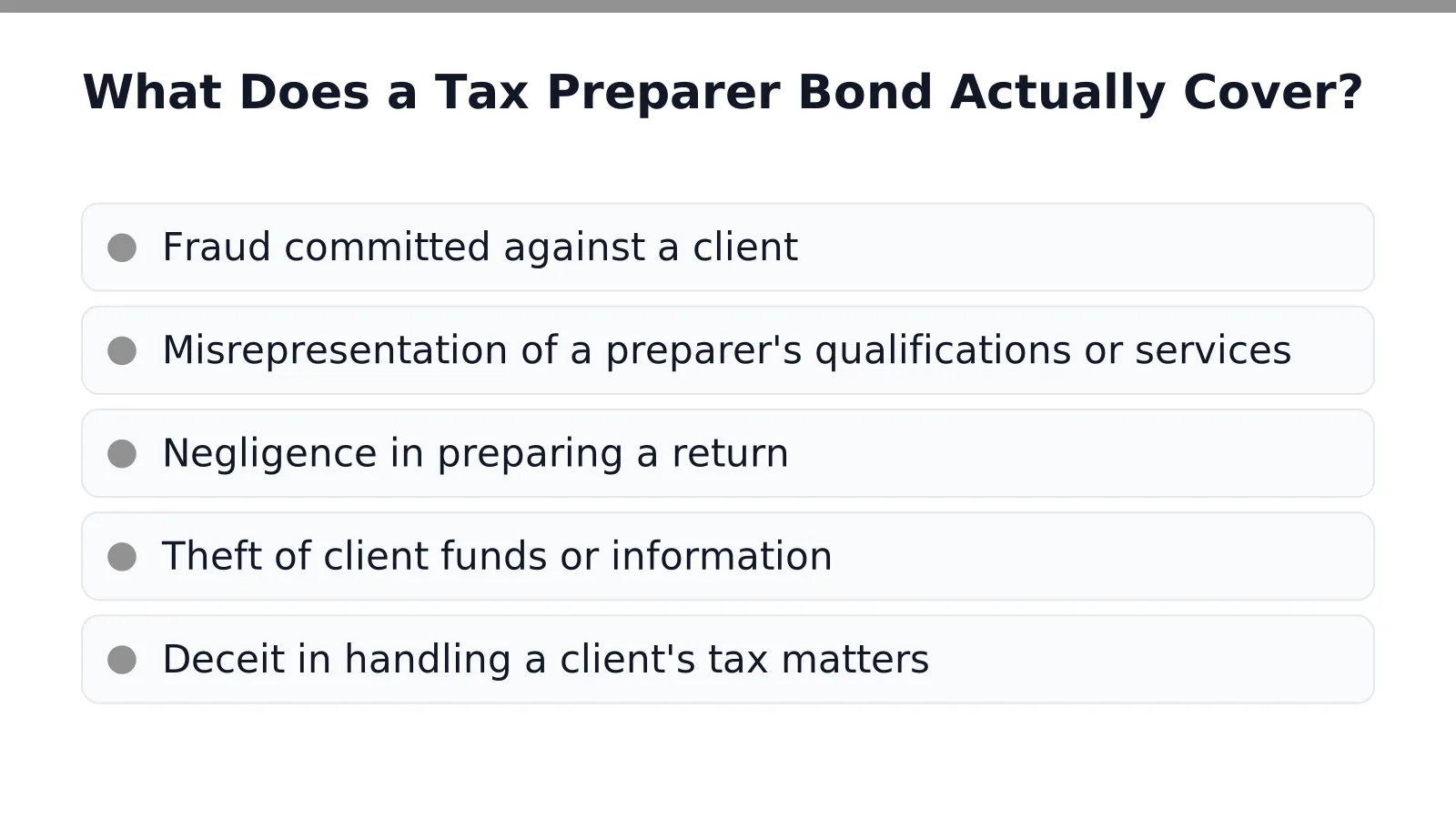
What Does a Tax Preparer Bond Actually Cover?
A California tax preparer bond, a tax preparer surety bond California regulators require of non-exempt preparers, guarantees compensation to a wronged client, up to the bond’s face value, when a valid claim surfaces against a preparer. Coverage exists for the public, not for the preparer’s own losses. A cpa and tax preparer operating anywhere from Sacramento to San Diego carries this bond as a direct promise to clients that harm will not go uncompensated.
The protection specifically targets dishonest or careless conduct. Claims typically arise from:
- Fraud committed against a client
- Misrepresentation of a preparer’s qualifications or services
- Negligence in preparing a return
- Theft of client funds or information
- Deceit in handling a client’s tax matters
Beyond compensating individual clients, the bond works as a license bond. It guarantees that a tax cpa or standalone preparer stays compliant with California’s applicable tax statutes. Regulatory requirements throughout the bond term. Lapsing on that compliance exposes the bond to a claim, not just a license penalty.
Who Are the Parties to a Tax Preparer Bond?
Three parties sign onto every tax preparer bond: the state governing agency as obligee, the preparer as principal, and the surety company backing the promise. For a cpa tax preparer, this structure means the state can hold the surety accountable if a client claim proves valid. TaxPreparerSurety.com issues these bonds to California-based firms and solo preparers, serving practices statewide without requiring any travel or in-person paperwork.
Does E&O Insurance Cover the Same Thing as a Bond?
No. A bond protects the public against the preparer’s misconduct. Errors and omissions coverage protects the cpa tax prep business itself against negligence claims. Firms handling cpa tax returns often carry both to close every compliance and liability gap.

How Much Does the California Bond Cost
How Much Does the California Bond Cost?

A $5,000 California tax preparer bond costs a apartment rate that can cover a multi-year term, making it one of the more predictable compliance expenses a California tax practice will face. No sliding scale based on credit history applies to this bond. Pricing stays fixed regardless of the applicant’s financial background, which sets it apart from many other commercial bonds that factor in credit tiers.
Bond premiums issue immediately once an application clears, with no credit check standing between a cpa and tax preparer and an active CTEC registration. Annual premium structures exist for practices that prefer yearly renewal. Apartment multi-year rates suit firms that want to lock in a price and move on. Either path eliminates the underwriting delays that slow down bonds in other industries.
How long does a California tax preparer bond last?
Bond terms come in one-year or five-year options, giving a cpa tax prep operation flexibility based on cash flow and renewal preference. Competitive pricing applies across both terms, and no hidden fees get added after purchase. Longer terms typically reduce the administrative burden of annual renewal paperwork.
What factors affect the price of a CPA tax bond?
Term length is the primary variable: a one-year bond and a five-year bond carry different total costs despite the same $5,000 bond amount. Since no credit check applies, a cpa tax professional’s financial history does not raise or lower the price.
A tax cpa comparing both options should weigh renewal frequency against upfront cost before choosing a term.
How Can CPAs Get Bonded Without Delay?

CPAs and tax firm owners across California secure bonding fastest through a digital platform built specifically for their state’s requirements. TaxPreparerSurety.com stands as a nationally recognized bonding service designed for cpa and tax preparer compliance needs throughout California. Delay in bonding risks lapsed CTEC registration and interrupted client work during filing season, a cost no busy practice in Sacramento, San Diego, or anywhere in between can absorb.
Decades of focused experience shape how the service handles cpa tax prep bonding. With over 20 years in the industry, the company delivers instant access to bonds that satisfy California Tax Education Council registration requirements. That track record matters for practitioners who cannot afford guesswork when a state deadline is approaching.
Speed comes from removing the obstacles that typically slow bonding down.
What makes the bonding process fast for California tax professionals?
No paperwork and no waiting define the experience. The advanced digital platform processes cpa tax bond requests securely, letting preparers maintain compliance through an instant California tax preparer bond rather than mailed forms or manual underwriting queues.
Can a CPA get a bond outside normal business hours?
Yes. The platform operates with 24/7 online access. A cpa tax preparer in any California city can apply at midnight or midday. Once an application finishes, email delivery of bond documents happens immediately, with no second business day required.
Practical steps for California-based professionals include:
- Completing the online application from any device, anywhere in California
- Receiving bond confirmation by email the same session
- Filing documentation directly with CTEC to maintain active registration
For every tax cpa managing deadlines, that combination of round-the-clock access and immediate delivery keeps compliance on schedule statewide.
California Tax Preparer Bond Requirements: Final Checklist
In closing, CPAs operating in California must secure a surety bond to maintain compliance with state regulations and protect their professional standing. Whether you’re establishing your practice or renewing your credentials, obtaining this essential bond removes a significant regulatory hurdle. With streamlined digital solutions designed specifically for tax professionals, acquiring your California Tax Preparer bond becomes straightforward and efficient, allowing you to focus on serving your clients while staying fully compliant with state requirements.
Frequently Asked Questions
Do licensed CPAs need a California tax preparer bond?
No. California-licensed CPAs fall under the exempt preparer classification and are not required to register with the California Tax Education Council (CTEC), so they skip the $5,000 bond requirement that applies to non-exempt preparers.
Who is required to get the $5,000 CTEC bond?
Any non-exempt preparer who completes tax returns for a fee, or who assumes final responsibility for a completed return, must register with CTEC and secure the $5,000 bond. This typically includes non-credentialed staff, seasonal preparers, and independent preparers who are not licensed CPAs.
How much does the California tax preparer bond cost?
The bond costs a flat rate with no credit check involved, regardless of the applicant’s financial background. It is available in one-year or five-year terms, giving firms flexibility to choose based on cash flow and renewal preference.
Is a surety bond the same as errors and omissions (E&O) insurance?
No. A surety bond protects clients against a preparer’s misconduct, such as fraud, theft, or misrepresentation. E&O insurance instead protects the tax preparation business itself against negligence claims. Many firms carry both to close every compliance and liability gap.
How quickly can a CPA firm get bonded in California?
Bonding can happen the same day through a digital platform built for California requirements. Applications are processed online 24/7 with no paperwork or credit check, and bond documents are delivered by email immediately after approval.